

Choosing Sustainable Pots and Compost for Indoor Plants
Why your pot and compost matter as much as the plant
You can choose a beautiful fern, water it faithfully and still watch it sulk. Often the culprit is the two things nobody photographs: the pot it sits in and the compost around its roots. In a British home — centrally heated, dim in winter, steamy in the bathroom — those two choices decide whether roots stay healthy or rot quietly. The good news is that the most sustainable options are also some of the most practical, and none of them require you to compromise on how your plants look on the windowsill.
Recycled plastic pots: light, thrifty and water-retentive
Recycled plastic pots are typically made from reprocessed high-density polyethylene, the same family of plastic as milk bottles and detergent containers. They are cheap, lightweight and available in every size from 5cm seedling pots to 30cm floor-standing planters.
Because plastic is non-porous, it holds moisture far longer than unglazed clay. That suits thirsty plants — ferns, peace lilies, calatheas, spider plants — and anyone who forgets to water until Friday. It is also the only realistic option for a heavy plant on a shelf, since a large plastic pot weighs a fraction of its ceramic equivalent.
- Look for pots labelled as made from recycled material, and check whether your council accepts rigid plastic pots in kerbside recycling. Soft, floppy ones usually go in the bin.
- Watch out for overwatering. Non-porous walls mean less evaporation, so always use a pot with drainage holes and empty the saucer.
- Styling tip: drop a functional plastic pot inside a decorative cover pot. You get the look you want, and you can lift the inner pot out to water at the sink — no drips on the sideboard.
Terracotta: breathable, durable and worth sourcing carefully
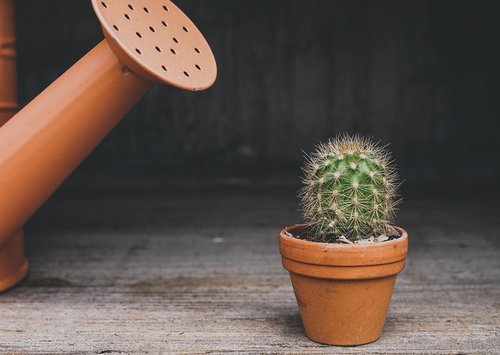
Unglazed terracotta is fired clay, and it is the most breathable pot you can buy. Its porous walls wick moisture out through the sides, which lowers the risk of root rot and suits plants that like to dry out between waterings: cacti, succulents, snake plants, rosemary and most kitchen-windowsill herbs.
The trade-off is speed. A terracotta pot can dry out two or three times faster than plastic, so you will water more often — particularly in a warm, sunny room in July. A plant in a 15cm terracotta pot may need checking every two or three days in summer; the same plant in plastic might last a week.
- Buy once, keep for decades. Well-made terracotta can outlive most houseplants. Soak new pots in water for a few hours before planting so they don't steal moisture from the compost.
- Check the firing. Pots fired at high temperatures are frost-resistant and less likely to flake or split. Cheap, low-fired pots crumble within a few years, which rather defeats the purpose.
- Clean, don't bleach. Scrub used pots with hot soapy water and a stiff brush. White salt deposits on the rim are harmless; a thorough scrub between plants is enough to stop pests and diseases moving in.
Peat-free compost: the biggest change you can make
Peat extraction destroys bog habitats that took thousands of years to form and releases stored carbon. With peat sales to UK gardeners being phased out, peat-free compost is now the default rather than the alternative, and modern blends have improved enormously.
Read the ingredients list rather than the picture on the bag. Good peat-free mixes are built from a combination of:
- Coir (coconut fibre) — excellent water retention and a reliable base for most houseplants.
- Bark and wood fibre — open up the mix and improve drainage and airflow around roots.
- Green waste — adds nutrients and body, though quality varies between batches.
- Loam — gives weight and nutrient-holding capacity, useful in John Innes-style mixes for larger specimens.
- Worm castings or biochar — a bonus in premium blends, improving structure and slowly releasing nutrients.
Two practical adjustments: peat-free compost can be harder to rewet once it dries out, so water little and often rather than flooding a bone-dry pot, and stand the pot in a tray of water for half an hour if it has gone truly crisp. Because most peat-free mixes contain fewer starter nutrients than old peat-based ones, begin feeding after about four to six weeks of active growth.
Matching pot and compost to plant and room
Think of the pot and compost as one system, tuned to a single plant in a single spot.
- Bathroom, low light, moisture-lovers — glazed or plastic pot with a coir-rich peat-free mix. Less evaporation suits ferns and peace lilies.
- Sunny south-facing windowsill — terracotta plus a gritty, free-draining mix for succulents, cacti and herbs.
- Large statement plant in a hallway — a big plastic or fibreglass pot keeps weight manageable; use a loam-based peat-free mix for stability.
- Erratic waterer — choose plastic with a decent saucer, or add a self-watering insert, rather than fighting terracotta's speed.
Small habits that cut waste over time
- Reuse before you recycle. Wash and stack pots; they take up almost no space.
- Repot, don't replace. Move a plant up one pot size at a time rather than buying a whole new display.
- Make your own mix. Blend leftover peat-free compost with grit or perlite and a handful of worm castings; it is cheaper and you control the drainage.
- Top-dress annually. Scrape off the top 2–3cm of compost, replace with fresh, and feed through the growing season instead of repotting every spring.
None of this needs to be perfect. Choose one change this season — a peat-free bag, a terracotta pot for a sun-loving succulent, a cover pot to hide the plastic — and your plants, your windowsill and the bogs will all be better off for it.
tag: Sustainable Living

Priya Nair Author
Adjust feeding, pruning and repotting routines through the changing seasons to support strong growth and prevent stress indoors.
YOU MAY ALSO LIKE
Seasonal Jobs for Houseplants in Spring and Autumn
Aug 30
10Identify aphids, spider mites and fungus gnats early, then use gentle methods to protect your indoor garden safely.
read more
Natural Ways to Tackle Common Houseplant Pests
Aug 28
10Raise humidity, trim brown fronds and adjust watering to help a thirsty fern recover in centrally heated rooms.
read morePlant Care
-

ERRIC CATONA
Use climbing plants, trellises and tall grasses to screen neighbours while adding texture and shade to your outdoor space.
May 19, 2016 at 5.12 pm
Reply
ERRIC CATONA
These resilient species tolerate irregular watering and lower light, making them ideal for people with limited time at home.
May 19, 2016 at 5.12 pm
Reply -
ERRIC CATONA
Position reflective surfaces opposite windows and pair them with glossy leaves to maximise natural light in your home.
May 19, 2016 at 5.12 pm
Reply
Home Styling
Your email address will not be published.