

A Beginner's Guide to Watering Indoor Plants Correctly
Why Watering Is the Hardest Skill to Master
If you have ever watched a perfectly healthy houseplant collapse into a yellow, soggy mess, you are in good company. Watering is the single most common stumbling block for new plant owners in Britain, and it is almost always the same problem: too much, too often. Our homes may be damp and grey outside, but indoors the combination of central heating, double glazing and sealed windows creates a surprisingly dry environment — and yet the classic mistake is still drowning the roots rather than letting them dry out.
The good news is that plants are forgiving once you understand what you are actually trying to achieve. You are not simply giving them a drink; you are managing the balance of air and water in the compost. Roots need both. When every pore is filled with water, roots suffocate, rot sets in, and the damage shows up as yellowing leaves, mushy stems and that unmistakable sour smell from the pot.
The Finger Test: Your Most Reliable Tool
Before you reach for the watering can, push a finger into the compost up to your second knuckle. This simple check tells you more than any fancy gadget. What you feel will guide you:
- Dry and crumbly: water thoroughly until it runs out of the drainage holes.
- Slightly damp, like a wrung-out sponge: wait a day or two and check again.
- Wet and clinging to your finger: leave it alone. Step away from the watering can.
For larger pots where your finger cannot reach far enough, a bamboo cane or wooden skewer works beautifully. Push it deep into the compost, leave it for a minute, then pull it out. If it comes away clean and dry, the plant is ready. If it is dark and speckled with damp compost, hold off. This trick is especially useful for mature monsteras and rubber plants in big floor-standing pots.
Weight, Leaves and the Signs Plants Give You
Once you have a feel for your plants, you can often tell by lifting the pot. A dry pot is surprisingly light; a saturated one feels heavy and solid. This is a quick, no-mess check you can do every few days as you walk past.
The leaves are talking to you too, and they say different things depending on the problem:
- Drooping, limp leaves with dry compost: a clear cry for water.
- Yellowing lower leaves, soft brown patches, and compost that never dries: classic overwatering damage.
- Crispy brown tips: often low humidity or inconsistent watering, common in heated British living rooms.
- Wilting despite damp compost: a warning sign that roots have rotted and can no longer take up water.
Learning to read these signals takes a few weeks, but it will save you a great deal of guesswork.
Watering Technique: How You Water Matters as Much as When
Little and often is the wrong approach. A light daily splash only wets the top layer of compost, encouraging shallow roots and leaving the lower roots thirsty. Instead, water generously but less frequently, so the whole root ball gets a proper soak.
Take the pot to the sink or place it on a saucer, then pour slowly around the edge of the compost rather than straight down the stem. Keep going until water trickles from the drainage holes. After fifteen minutes, tip away anything left standing in the saucer — sitting in water is a fast route to root rot. If your pot has no drainage holes at all, consider repotting into something that does, or use a plastic nursery pot slipped inside a decorative cover and remove it for watering.
Water temperature matters too. Cold water straight from the tap can shock tropical roots, so let it stand for an hour to reach room temperature. If you live in a hard water area, rainwater collected in a bucket is a treat for ferns, calatheas and other sensitive plants.
Adjusting for British Homes and Seasons
There is no fixed watering schedule that works all year, and anyone who tells you to water every Sunday is leading you astray. In winter, when light levels drop and most plants are resting, growth slows dramatically and they need far less water — often half or even a quarter of their summer intake. From November to February, check the compost before every watering and expect longer gaps.
Summer is the opposite. Longer days, active growth and open windows mean plants drink quickly, and you may find yourself watering every few days. Other factors shift things further:
- Central heating and radiators: dry the air and speed up moisture loss from compost.
- North-facing rooms: lower light means slower growth and slower water use.
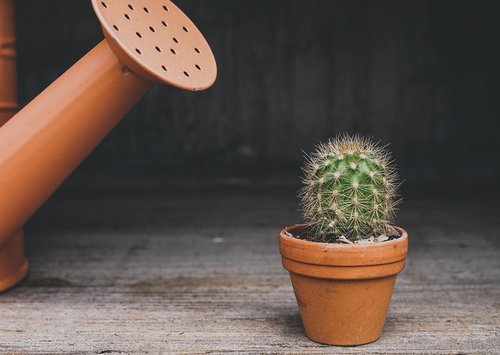
- Terracotta pots: porous and breathable, so they dry out faster than glazed or plastic ones.
- Small pots: dry out far quicker than large ones, as there is less compost to hold reserves.
Grouping plants together helps raise humidity around them, which suits most tropical varieties, but leave a little air between pots so damp cannot spread from one to another.
Fixing an Overwatered Plant
If you suspect you have been too generous, act quickly. Stop watering entirely and move the plant somewhere bright but out of direct sun. Gently slide it from its pot and inspect the roots: healthy roots are firm and pale, while rotten ones are brown, soft and smell unpleasant. Trim away the damaged roots with clean scissors, dust the cuts with a little cinnamon if you have it, and repot into fresh, free-draining compost in a clean pot.
Then be patient. Recovery takes weeks, and the plant may drop a few leaves while it rebuilds. Resist the urge to water it back to health — that is the mistake that finished it off in the first place.
tag: Plant Care

Tom Beresford Author
Create a calm nook using layered greenery, warm lighting and a comfortable chair to make the most of a quiet corner.
YOU MAY ALSO LIKE
Styling a Cosy Reading Corner with Ferns and Books
Sep 18
10Use slim shelving, wall-mounted pots and trailing plants to bring life to awkward spaces without blocking the walkway.
read more
Clever Plant Displays for Narrow Hallways and Landings
Sep 12
10Plan a compact outdoor retreat with hardy pots, vertical planters and weatherproof furniture suited to British conditions all year round.
read morePlant Care
-

ERRIC CATONA
Compare recycled plastic, terracotta and peat-free compost options that reduce waste while keeping your plants healthy at home.
May 19, 2016 at 5.12 pm
Reply
ERRIC CATONA
Adjust feeding, pruning and repotting routines through the changing seasons to support strong growth and prevent stress indoors.
May 19, 2016 at 5.12 pm
Reply -
ERRIC CATONA
Identify aphids, spider mites and fungus gnats early, then use gentle methods to protect your indoor garden safely.
May 19, 2016 at 5.12 pm
Reply
Home Styling
Your email address will not be published.